
PETP
PETP
PETP is a crystalline polyester with high mechanical strength and very good creep resistance and dimensional stability. The material also has a low and constant friction coefficient and is highly wear-resistant. The high hardness of the material makes it sensitive to notch impact. Sharp corners and edges in products should be avoided.
The material distinguishes itself from other wear-resistant plastics through its high tensile and flexural strength and compressive strength. It is one of the hardest types of plastic, does not suffer from creep (cold flow), and absorbs practically no moisture. However, the relative brittleness of the material must be taken into account, which makes it less suitable for impact loads.
PETP has a very low friction coefficient, is self-extinguishing, and is suitable for contact with foodstuffs. Dimensionally stable precision work is the prime application area for this plastic. The material is also available in a self-lubricating (TX) grade.
Key characteristics
- Operating temperature: -20˚ to 100˚
- High mechanical strength, stiffness, and hardness
- Very good creep resistance
- Low and constant friction coefficient
- Excellent wear resistance (comparable to or even better than the polyamides)
- Very high dimensional stability (better than POM)
- Stain resistant
- Better resistance to acids than PA and POM
- Good electrical insulating properties
- Physiologically inert (suitable for contact with foodstuffs)
- High resistance to high-energy radiation (gamma and X-rays)


Applications of PETP
PETP stands out when dimensional stability and low moisture absorption are essential, particularly for dimensionally stable precision work. Thanks to its low and constant friction coefficient and excellent wear resistance, the material is highly suitable for plain bearing bushings and guides that need to function accurately under continuous load. The high tensile, flexural, and compressive strength also make PETP suitable for gears and precision components that are both mechanically loaded and require an accurate fit.
Due to its good electrical insulating properties, PETP is also used in components where electrical insulation plays a role. Because of its physiological inertness, the material is also suitable for applications within the food industry, where contact with foodstuffs is a requirement. Do take care with designs involving sharp corners or impact loads: due to the material's relative brittleness, gradual shaping is important here.
Typical applications include:
- Plain bearing bushings and guides
- Gears
- Pistons and scrapers
- Forming plates
- Precision components
- Cable pulleys
- Components for the food industry where dimensional stability and hygiene are important
Our possibilities
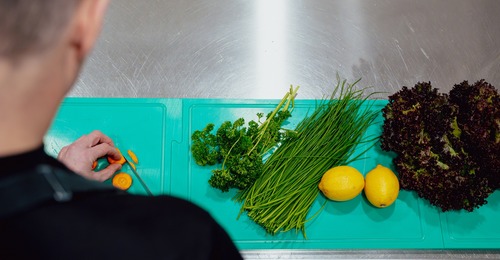
Food grade certified plastics
Components in the food industry are exposed to cleaning agents and temperature fluctuations on a daily basis. Lakwijk selects materials that can withstand this, ranging from standard POM to high-performance PEEK for the most demanding conditions. This helps prevent deformation, wear, and unnecessary downtime.
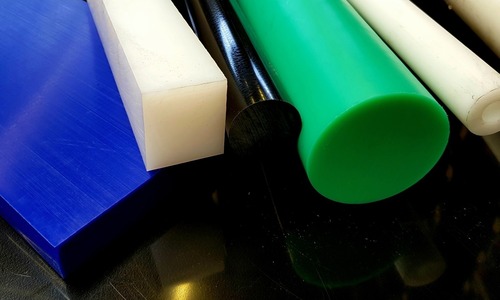
Custom material advice
Not every plastic behaves the same way under load, moisture, or heat. Lakwijk knows the properties of commonly used materials such as POM, PA, and HMPE, as well as high-performance plastics like PEEK, PAI, and PTFE. By combining this knowledge with your specific application, we advise a material that isn't just suitable on paper, but also performs well in practice.
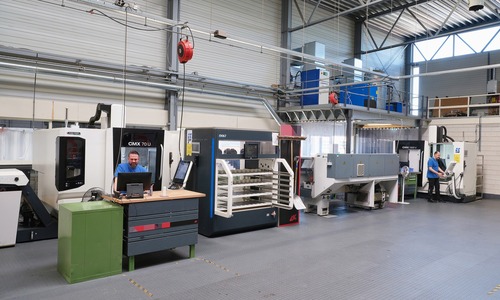
All processing techniques in-house
Plastic starts out as sheet or rod material and is processed step by step at Lakwijk into a precise end product. Our operators saw, mill, turn, bend, weld, and glue, depending on what the component requires.
We can't wait to help you too!


 01 September 2026Time to catch upReading time:: 1 minute
At Lakwijk Kunststoffen BV, we never close our doors during the summer. Whilst our special...
 26 May 2026Not scoring orders - that’s not how we workReading time:: 1 minute
We are featured in the Regio Business Magazine this month
 04 December 2025We’re never “finished”Reading time:: less than 1 minute
We make room for a new generation that accelerates our innovation, while we continue to in...
 01 December 2025Visit of the State Secretary to Lakwijk KunststoffenReading time:: less than 1 minute
State Secretary Thierry Aartsen visited us to see how we are working together to build a c...
 27 November 2025Breakfast with Mayor MikkersReading time:: less than 1 minute
A day full of warm Bossche politics, inspiring encounters and a surprise on the Day of the...
 24 November 2025We continue expanding our machine parkReading time:: less than 1 minute
Our modern CNC machine park continues to grow with the installation of a new thickness pla...
 21 November 2025Sustainable lightingReading time:: less than 1 minute
Our hall 8 is now fully equipped with new LED lighting – thanks to Tubo Elektro.
 13 November 2025Proud of our colleagues: Respect CupReading time:: less than 1 minute
Proud of our colleagues Leon and Didier for their efforts in the Respect Cup for children ...
 05 November 2025Lakwijk Kunststoffen sports sponsorshipReading time:: less than 1 minute
Two beach volleyball victories, partly thanks to our sponsorship – well done team!
 30 October 2025Lakwijk Kunststoffen and Hart voor de ZaakReading time:: less than 1 minute
Together with the Heart Foundation and Niped, we use periodic medical examinations to enco...
 27 October 2025Vandalized WensAmbulance donation box restoredReading time:: less than 1 minute
We were happy to help restore the donation box for WensAmbulance Brabant after an unfortun...
 20 October 2025Lakwijk Kunststoffen in Regio Business: always on the moveReading time:: less than 1 minute
In Regio Business we explain how we combine movement, work enjoyment and a customised work...
 01 October 2025Double expansion of our machine parkReading time:: 1 minute
This month we are expanding our machine park with new Mazak and Biesse machines for more c...
 01 November 2024Lakwijk Kunststoffen at the 2024 Plastics FairReading time:: less than 1 minute
We are at the Kunststoffenbeurs in the Brabanthallen this week, meeting many existing and ...
 18 June 2024We keep running throughout the summerReading time:: less than 1 minute
We remain open throughout the summer, thanks to the flexible holiday planning of our colle...
 03 June 2024René: 40 years at Lakwijk Kunststoffen!Reading time:: less than 1 minute
We proudly celebrate René’s 40-year anniversary, a key figure in the growth of our company...
 21 May 2024Development takes center stage at Lakwijk KunststoffenReading time:: 1 minute
Cedric followed a unique minor in Norway and we were happy to help him prepare well for it...
 02 January 2024Machine park developmentReading time:: less than 1 minute
With the new Weinig machine we expand our machine park and strengthen our automated produc...
 19 December 2023Lakwijk sponsors Teachers for TeachersReading time:: less than 1 minute
Thanks to our support, Mariëtte was able to give workshops in Kenya and take part in the T...
 01 December 2023Protective covers for ProRailReading time:: 1 minute
For ProRail we once again produced impact-resistant polycarbonate protective covers to pre...
 09 August 2023Lakwijk Kunststoffen produces plastic bricks for UnicefReading time:: less than 1 minute
We helped Unicef with 160 recycled example bricks for the project that converts plastic wa...
 06 June 2023We are renovatingReading time:: less than 1 minute
The renovation is progressing well: our new space for the expanded machine park is taking ...
 07 December 2022Prevent drafts and reduce your energy consumptionReading time:: less than 1 minute
Our soft PVC strip curtains reduce draught and heat loss and are fully custom-made.
 01 December 2022Food GradeReading time:: 1 minute
With help from student Koen van Empel we refined our Food Grade process and continue to me...
 01 September 2022Sponsoring Maikel ScheffersReading time:: less than 1 minute
We continue to support top athlete Maikel Scheffers and proudly contribute to his goals.
 18 October 2021Lakwijk in the latest edition of Regio Business!Reading time:: less than 1 minute
Our article in Regio Business shows why good employment practices are essential for us.
 01 September 2021Lakwijk fully meets Food Grade requirementsReading time:: less than 1 minute
We welcome Pascal van Helvoort, who will provide customers with technical advice and optim...
 01 September 2021Lakwijk is growing!Reading time:: less than 1 minute
Our building has been expanded with extra space, an important step to continue growing tec...
 16 August 2021New sustainable extraction system at LakwijkReading time:: 1 minute
We invested in a new Riedex extraction system that offers more capacity with lower energy ...
 10 August 2021Further expansion of Lakwijk’s machine parkReading time:: 1 minute
We are taking the next big step: a new 5-axis CNC machine with a linked robot for series o...
 03 August 2021Vepa Bedrijfskleding on the work floorReading time:: less than 1 minute
We gladly welcomed our workwear partner Vepa, with whom we have had a strong partnership s...
 20 April 2021Vandalism-resistant plastic protective coverReading time:: less than 1 minute
For ProRail we developed an impact-resistant polycarbonate protective cover that prevents ...
 05 April 2021Sustainable use of plastic materialsReading time:: 1 minute
Sustainability is central to us: from designing lighter and more efficient products to act...
 23 March 2021Lakwijk Kunststoffen: A chameleon for 40 yearsReading time:: less than 1 minute
A special year: 40 years of Lakwijk, 10 years of leadership by Mark and a large-scale expa...
 14 October 2020View on Plastics: scratch sensitivityReading time:: less than 1 minute
Plastics offer many advantages, but for visible applications it is important to consider p...
 01 January 2017Lakwijk turns 40!Reading time:: less than 1 minute
After 40 years of growth we continue to invest in our machine park, our employees and furt...
 05 December 2016Lean management collaboration with AvansReading time:: 1 minute
Avans students are helping us improve internal material flows and reduce waste using Lean ...
 03 October 2016Orthopaedic plastic application for the Jeroen Bosch HospitalReading time:: less than 1 minute
For the medical sector we produce tools that help surgeons determine the correct hip prost...
 19 September 2016Lakwijk expands with a new buildingReading time:: 1 minute
With the expansion into the neighbouring building we create extra space to continue our gr...
 01 September 2016Lean management philosophy at our “Biesseplein”Reading time:: less than 1 minute
With the expansion we are redesigning our workspaces according to LEAN principles, with Fr...
 05 July 2016Richard Alberts on TIVAR HPVReading time:: 1 minute
We advise customers on new plastic developments such as TIVAR HPV: an extremely wear-resis...
 21 March 2016Accurate planning is fundamental to our processReading time:: 1 minute
We ensure a smooth process from advice to order thanks to fast quotations, precise plannin...
 25 January 2016Thinking along and providing technical adviceReading time:: 1 minute
We deliver tailor-made plastic products and advise customers early in the development phas...
 02 December 2015High-quality transparent partition wallsReading time:: less than 1 minute
With custom-made shielding we create crystal-clear, safe and high-quality solutions for ev...


